>
Søg efter dato

oktober 2022

Uncategorized

Walrus may have triggered both the start and the end of the Norse settlements in Greenland

oktober 28, 2022 • Af
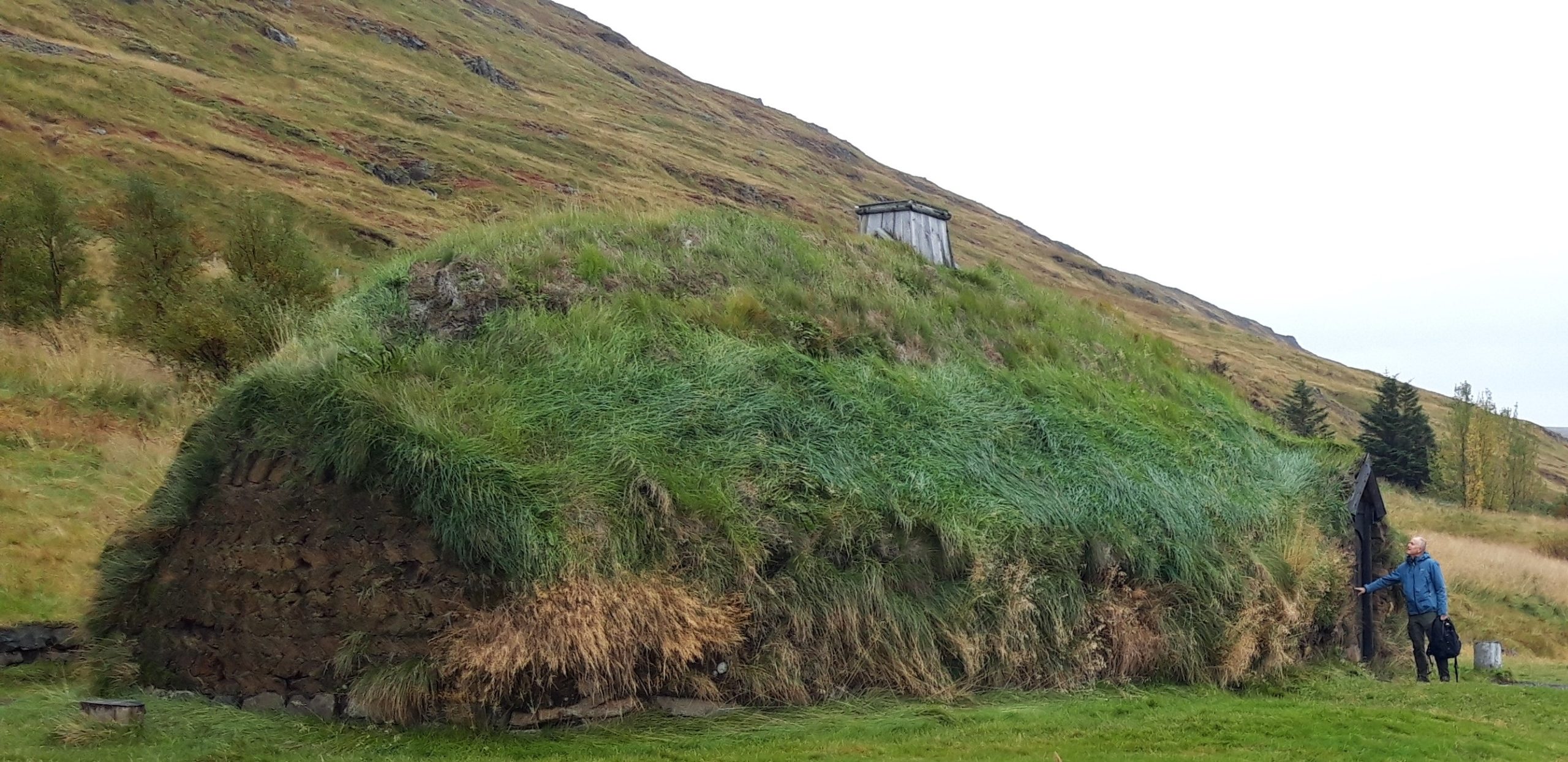
The author stands before a replica of the Icelandic home of Eiríkur Þorvaldsson, better known as Erik the Red, built according to archeological findings. (foto: Michael Poulsen)

I had expected it to be somewhat larger. Perhaps even a whiff of the regal, signs of a Viking ruler, a few glimmering swords in the corner, perhaps a fur cape, ornaments indicating the grand turns of history instigated by those tall and longhaired men and women who lived here.

My mistake, of course. Erik the Red and his wife , who went on to establish the famous Norse settlements in Greenland back in the 10th century — the first European communities in Greenland — were only youngsters when they married and built with their own hands this turf- and driftwood house on a piece of grassland given to them by Þjóðhildur’s father.

They did not lack, but they did not belong to the very wealthy of the early settlers in Iceland either. No sunlight entered their first home except through the hole in the roof over the fireplace and the floor was trodden earth.

They had a son, Leif, who would become one of the first Europeans to set a ship ashore on the American continent, but back in Iceland, where it all began, the family did not stand out. Erik was known as Eiríkur Þorvaldsson, the son of Thorvald, a common name.

The Saga of Erik

I recently visited the small museum in Haukadalur in northwest Iceland, where a replica of Erik’s and Þjóðhildur’s first family home now stands, built according to archaeological finds and other historical records.

The original stone foundation of their actual house lies covered by thick, healthy grass about 50 meters up the hill from the present replica of their house. Archeologists excavated the foundation in the late 19th century and others went deeper in the late 1990s to unearth a few additional traces of Erik’s and Þjóðhildur’s everyday life.
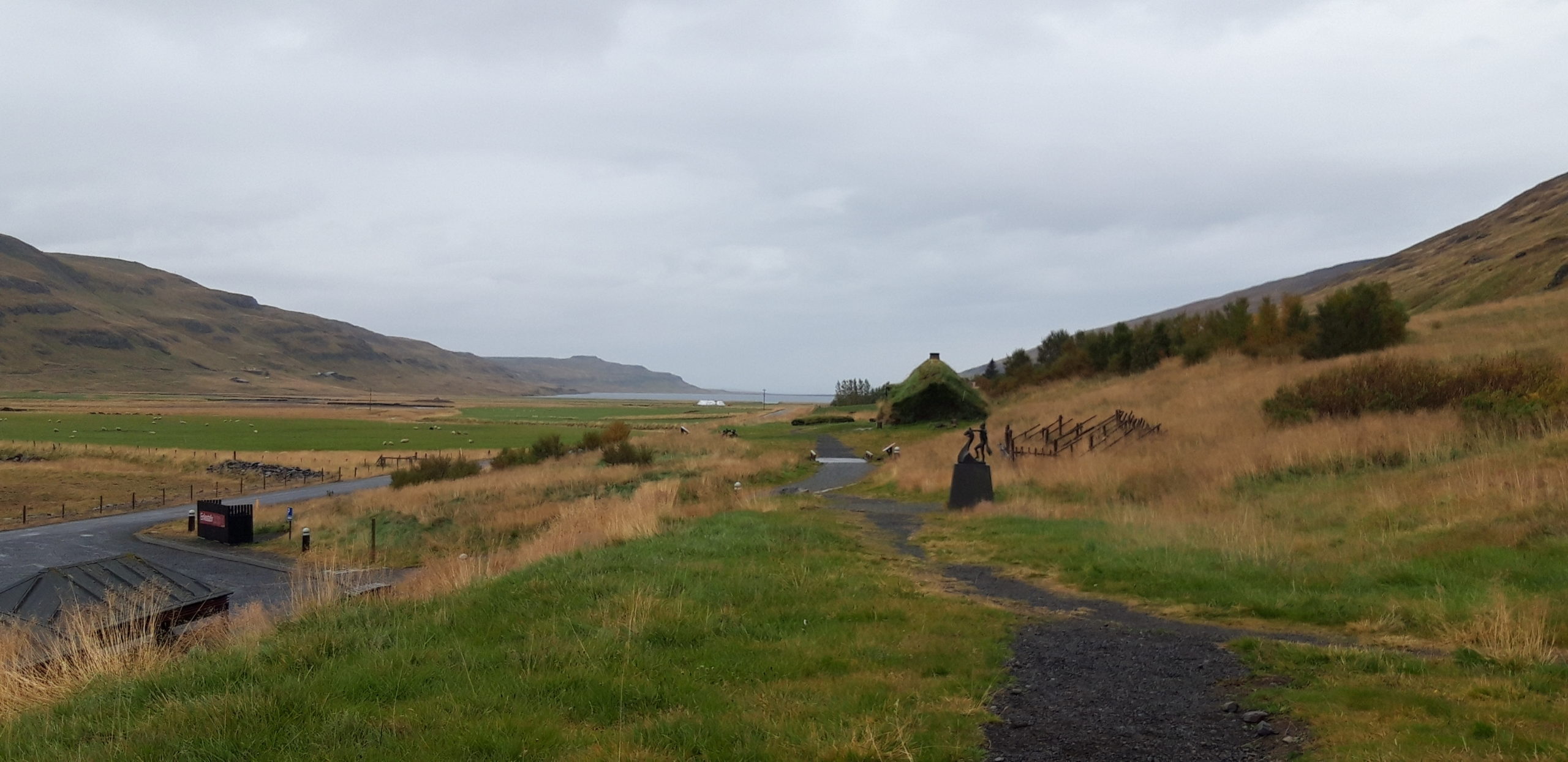
One question, however, has not been easy to answer. Erik’s and Þjóðhildur’s life in Iceland cannot have been all bad; the land around their home was obviously fertile, the climate hospitable, Þjóðhildur’s relatives were not far away, they were part of a community here, so why did Erik and Þjóðhildur decide to leave Iceland in the first place?

Murderer on the run

The mainstream explanation has been for long that it had become too dangerous for them to stay.

Erik killed two of neighbors in duels, according to the sagas; a bloody but legal way to settle grievances at the time. Perhaps out of fear of reprisals Erik and Þjóðhildur took their woodworks with them and shifted to an island in the nearby Breiðafjörður.

After another rift, Erik killed the two sons of a new neighbor, and this time it was not legal, but murder. Erik was deemed lawless, which meant anyone was free to kill him and make away with his belongings. Only if he went into exile for at least three years could Erik be exonerated.

That was why they set sail — or so the common story went.

After weeks at sea, Erik and his company arrived in what we now know as south Greenland. They spent the first two years exploring the fjords; it must have looked very similar to what they knew from Iceland.

Walking about their home in Iceland, I noticed a stark resemblance to south Greenland: Grassy, rolling hills, well suited for the sheep, pigs and cattle they took with them from Iceland. Heftier mountains not far away, waters known for an abundance of fish and sea mammals, flocks of geese, eider, ptarmigans and other fowl. They must have felt lucky, when they found all this in Greenland.

But still, why did they leave?

On the sunny side

“Erik had the sunny side of the valley. They must have had a particularly good reason to go,” said Bjarnheidur Johannsdottir, the daily manager of the replica museum, when I visited.

She believes that walrus was a decisive factor behind the decision making.

The first wave of settlers, who had come to Iceland from Norway, found a healthy, but relatively small population of walrus in the fjords in west Iceland.

They turned walrus hides into exceedingly strong leathery ropes, valuable in all of the seafaring nations of the North Atlantic. Walrus blubber was rendered into oil. And by far the most profitable walrus product was the animal’s ivory tusks.

The Icelanders were closely connected to trading networks in Europe, and walrus tusks were sold at ever higher prices. The ivory teeth were turned into highly valuable carvings in professionalized workshops in Norway, England and elsewhere.

The export of walrus tusks long provided a handsome income for the settlers along the coast, but when Erik grew up — so Johannsdottir tells me —  the trade in walrus items was in deep trouble.
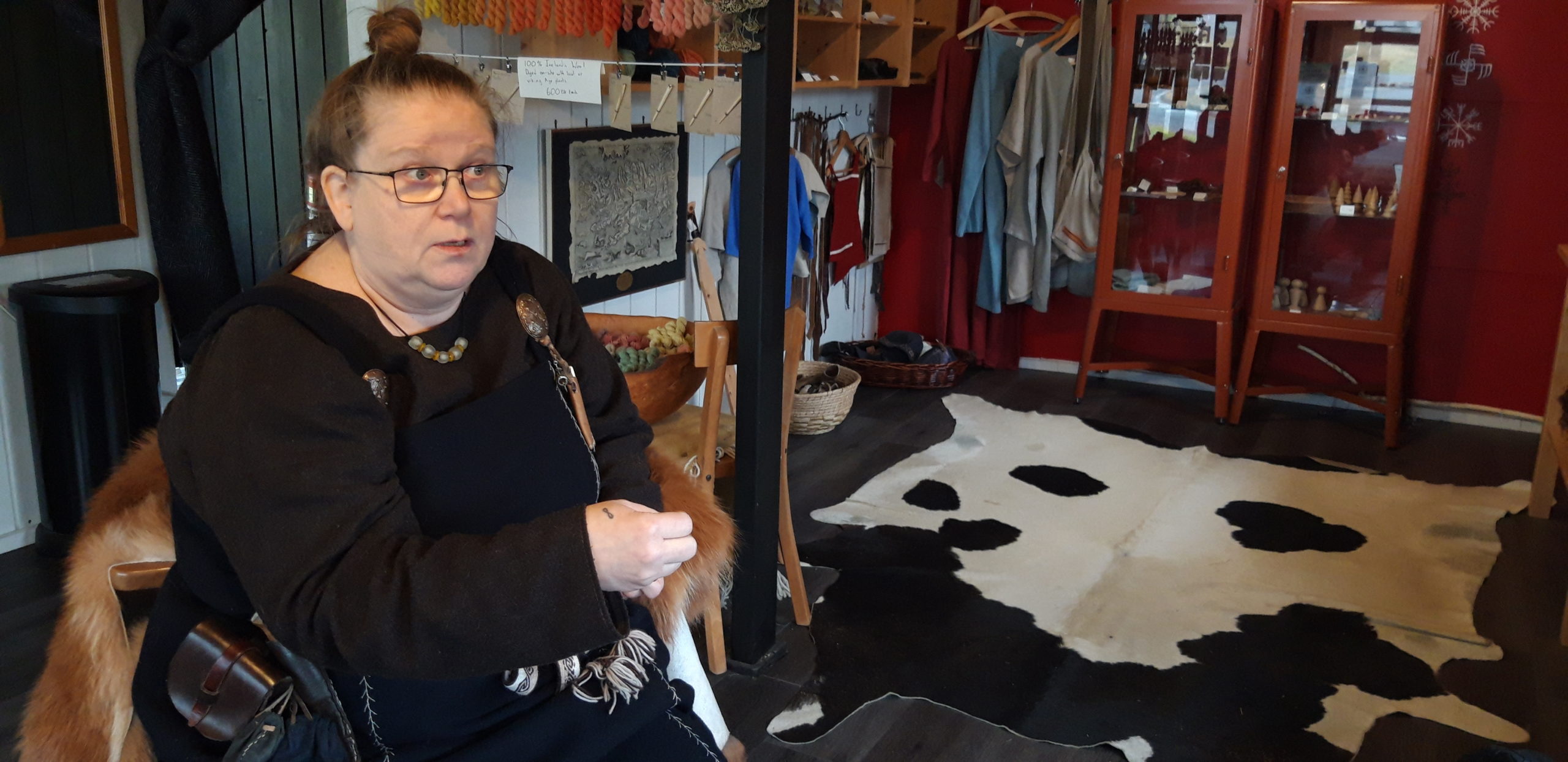
Manager of the Eirikstadur Museum, Bjarnheidur Johansdottir, lives just down the valley from Eirik the Red’s and Thordildur’s old homestead. The farms in the valley still go by the same names as those used a thousand years ago. (foto: Martin Breum)

“The earliest settlers had been in Iceland for the better part of a century. They had killed most of the walrus by then,” she said.

Erik and Þjóðhildur built their home in the middle of the conundrum. The waters not far to the west were known for their walruses: “We have islands in the fjords that have names indicating walruses,” Johannsdottir told me, but now the walruses were gone and Erik and Þjóðhildur was excited by the lure of walruses in Greenland.

But how would they have known of the walrus in Greenland? According to legend, after all, Erik and his entourage were the first Europeans to establish themselves there.

Others had been

Back in Copenhagen, I called on senior researcher Jette Arneborg, an archaeologist at Denmark’s National Museum, and found ample support for Johannsdottir’s interpretation. Arneborg has studied the Norse settlements in Greenland for decades and also visited Erik and Þjóðhildur’s home in Iceland.

“We have indications that they knew quite well that they would find walrus in Greenland,” she told me. She and her colleagues have found archaeological traces of Norse visits to Greenland that Arneborg believes predate Erik’s and Þjóðhildur’s arrival.

“Other Icelanders had most likely already been to Greenland and brought back word of the walruses,” she said.

She thinks that Erik’s and Þjóðhildur’s travels to Greenland were perhaps supported or even orchestrated by a consortium of Icelandic and perhaps Norwegian entrepreneurs.

“We know that sea-going ships were very expensive and seldom owned by a single person. Rather, they would belong to several people or entrepreneurs who were in it together,” she told me.
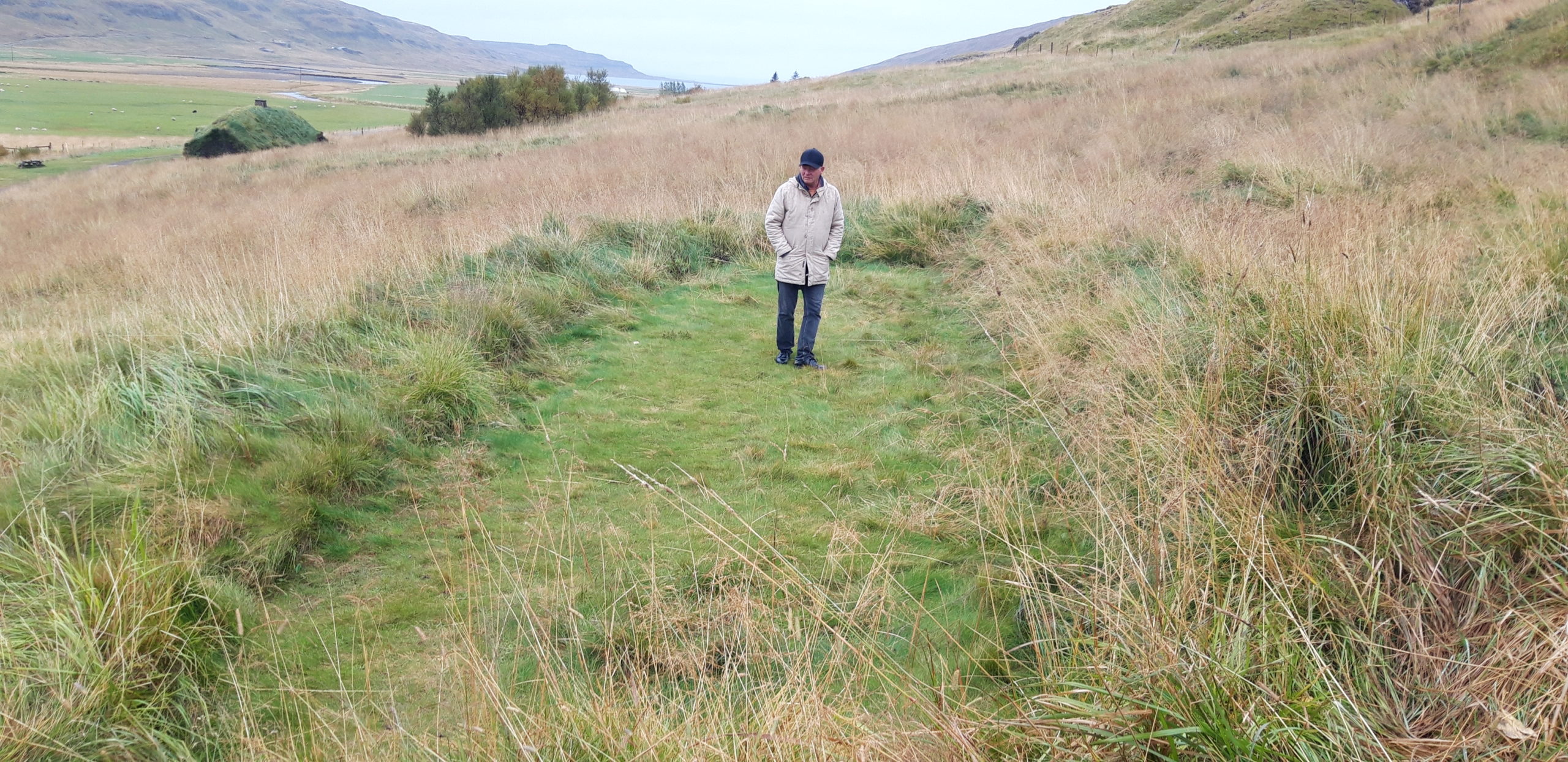
Archeologists found the actual site of Erik the Red’s and Thorhildur’s home a little above the place that was chosen for the replica. The first diggings were done here in the 19th century, and followed up in the late 1990s. (Martin Breum)

The promise of walrus in Greenland may also explain why Erik, as he returned briefly to Iceland after the first two years, was able to persuade so many other Icelanders to follow him back to Greenland:

“It makes good sense to include the walrus as a factor here,” Arneborg said. The prospect of unoccupied fertile valleys in Greenland probably also played a part as did the access to plenty of fish, fowl, seals and other foods, but Arneborg believes there is good reason to focus on the walrus: “They were most likely a very important incentive,” she said.

Vital walrus

In south Greenland, I visited some years ago the replica of Þjóðhildur and Erik the Red’s more substantive dwellings at Qassiarsuk; the place the Norse called Brattahlid. According to Jette Arneborg the replica there is probably somewhat larger than Erik’s and Þjóðhildur real-life home in Greenland would have been, but even so it seems the two of them did well there. When Þjóðhildur abandoned their old faith they even erected a small church a few steps from the main house.

I peered into their alcove in Greenland and noticed the separate walls and a separate door that would have provided the privacy they did not enjoy in Iceland. Greenland was good to them; they were better off there than in Iceland.

Their group grew to a wholesome society of farmer-hunters, numbering some 2,800 people at its height, according to the latest research (down from previous estimates of about 5,000 settlers).
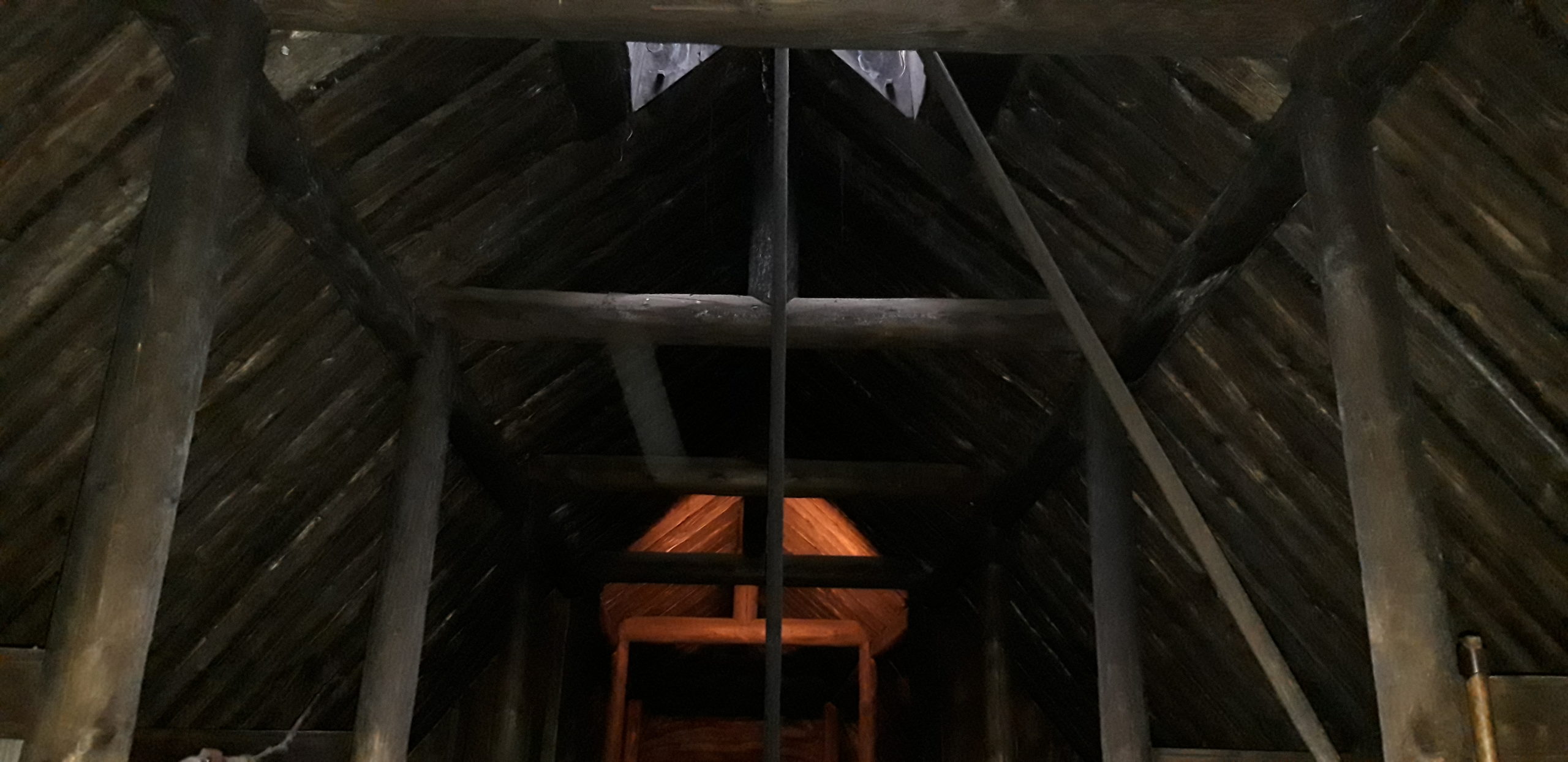
Houses in Iceland at the time of Erik the Red were built primarily off driftwood and turf. The woodwork was assembled without nails; dismantled and moved when necessary. (Martin Breum)

The Norse remained in Greenland for more than 400 years; the trade in walrus tusks was stunningly successful. According to Smithsonian Magazine  records from the 14th century tell of a single Norse boatload carrying tusks from 260 walruses that were worth more than all the woolen cloth sent to the Norwegian king by nearly 4,000 Icelandic farms for one six-year period. These figures may not all be correct, but there seems to be little doubt that the walrus trade was vitally important to the Norse.

The tusks and hides were traded for crucial necessities from Europe. Goods made of iron, for example, were indispensable to the Scandinavian lifestyle of the Norse.

Several accounts of their journeys to North America are known — but then things began to go bad. The latest records of the Norse in Greenland are from a wedding in 1408; at that time it seems that a gradual collapse of the walrus trade was putting an end to their community.

New amounts of African ivory were entering the European market; the plague in Europe hampered exchanges with the merchants in Norway and it was getting colder in Greenland; more sea ice and storms made commerce across the ocean difficult. Times were rough, and without a steady income from the tusks, the first European settlements in Greenland were no longer sustainable.

All in all, it appears that walruses might have provided both the beginning and the end of the story of the Norse in Greenland. The latest science supports this interpretation. But perhaps there is still more to be learned.

As Bjarnheidur Johannsdottir told me in Iceland when we sat looking out at Erik’s and Þjóðhildur’s first turf house in the valley and talked of his origins in Norway, his father and their travels across the sea: “I was born 20 feet from the sea myself,” she said. “Quite often I just have to go see it and smell it. I understand perfectly well why Erik may not have felt entirely satisfied here.”
blog

The largest ever probe into possible historical Danish wrongdoings in Greenland is about to begin

oktober 6, 2022 • Af

The largest ever investigation into possible abuses in Greenland by the former Danish colonial powers or more recent Danish governments is about to begin.

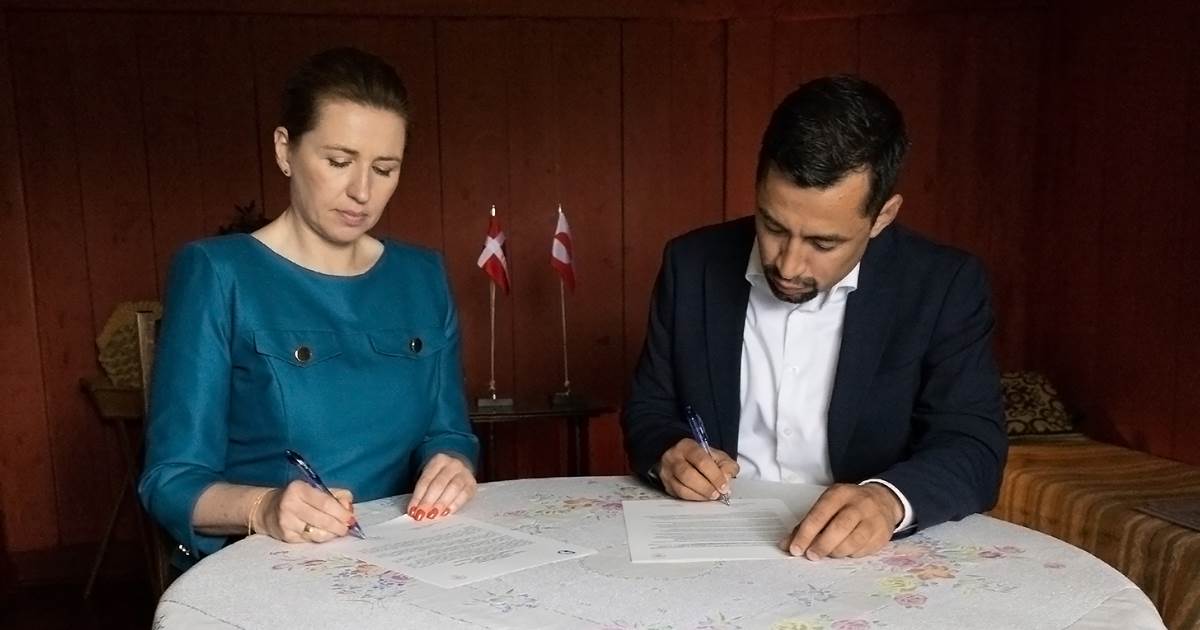
In June this year, the head of Naalakkersuisut, Greenland’s government, Múte B. Egede and Prime Minister Mette Frederiksen of Denmark, from where I write, agreed on a joint effort to investigate all major relevant incidents in the seven decades since the second world war.

Mette Frederiksen and Muté B. Egede signining in June their agreement to begin a joint investigation. Photo: The Primeministers office

Their joint statement received surprisingly little public attention, but it revealed an astonishing ambition:

“The investigation will cover the period from the second world war until today. The investigation will focus on the most important political decision, events and other circumstances that shaped the development of Greenland and its population as well as the relation between the two countries,” it said.

At no time in the past has any Danish government shown willingness to partake in such a wide-reaching and deep-probing exercise.

The statement by the two leaders was kept deliberately short and vague, leaving room for the civil servants to design in detail the more precise and potentially controversial mandate for the investigation. It is due later this month; the decisive proportions of the probe, its format, financing and duration is being hammered out as I write this.

Political will

Meanwhile, there is no reason to doubt the political will of the two political leaders behind the investigation.

In Greenland, anger over an extensive series of historical incidents — as well as more recent ones — and what might possibly amount to systematic violations of basic rights of Greenlanders has been brewing for generations and Egede added a separate statement to the joint communique: “During later years we have witnessed how one sad story has been revealed after the other. Stories that have carried with them great personal costs to the individuals involved. All of the people of Greenland stand behind the demand that a historical investigation be carried out,” he said.

In Denmark, Frederiksen has been contemplating a deeper probe for several years. After her first visit to Greenland in 2015, she told me that “it is quite a lot easier to establish a cooperation between Denmark and Greenland, if both parties acknowledge that mistakes have been made through time. You cannot spend many hours in Greenland before you realize that history and also its darker sides play a large role for many there.”

In June she was quoted in the formal press release as follows: “We have recently become aware of cases and processes that bear witness that there are still chapters of our common history that we have not yet uncovered. I am happy that we have made this joint decision about a historical investigation for the benefit of our two countries and for reconciliation with our common past.”

The upcoming probe must be understood in this light. The Danish prime minister most likely finds the entire exercise essential for future cooperation with Greenland. By acting on her conviction that a common approach to the past, including its troublesome sides, is necessary if reconciliation is to be achieved, she aims to restore Greenland’s faith in cooperation with Denmark at a time when Greenland and the Arctic is becoming still more important to Denmark.

No thanks

A few isolated events have been investigated on earlier occasions, reported on and even officially apologized for by shifting Danish governments, but we have not seen more encompassing investigations like that of Canada’s Truth and Reconciliation Commission or that of the ongoing investigations in Sweden, Norway and Finland. In those countries long-standing and possibly discriminatory practices against Sámi and other ethnic minorities are being scrutinized by other truth and reconciliation bodies.

Some will find that a thorough probe in the Danish kingdom is long overdue. The first Danish-Norwegian missionaries settled in Greenland in 1721 and Greenland was a de facto Danish colony from then on. From 1953, Greenland became an integral part of Denmark; Greenlanders are Danish citizens. Phenomenal changes, often spearheaded by Denmark, has taken place in Greenland since, so it is no surprise that the upcoming investigation will be pinned to this particular period of time.

Aki-Mathilda Høegh-Dam, Greenlandic member of the Danish parliament, talked of “genocide” when the latest scandal was unearthed. Photo: Siumut

In many respects, Greenland is an autonomous nation, ruled and regulated by Naalakkersuisut, the government in Nuuk, but the island and its people are is still part of the Danish Kingdom and subjects to the Danish constitution.

A separate Greenlandic Reconciliation Commission worked in Greenland from 2014-2017, but with limited impact. The then-head of Greenland’s government Aleqa Hammond often argued openly with the political establishment in Denmark (and she also caused controversy in Greenland).

When asked about potential Danish involvement in the reconciliatory commission proposed by Hammond, Denmark’s prime minister at the time, Helle Thorning-Schmidt, offered only an icy no thanks: “We don’t have a need for reconciliation,” she quipped.

The Greenlandic commission remained a local initiative and it only indirectly probed the events and processes that are often talked about in Greenland as systemic abuses caused by Danes or Denmark’s colonization of Greenland. Eyewitnesses and other people in Greenland were heard, recommendations written, but the Greenlandic commission suffered from a frequent exchange of personnel and shifting levels of political support from the political leaders in Nuuk.

Latest scandal

News of the upcoming joint investigation coincided with widespread consternation in Greenland over the latest scandal.

A Greenland women’s magazine Arnanut did the first interviews with women involved and in May this year the Danish Broadcasting Corporation revealed how, from 1966 to 1975, some 4,000 women — about half of the fertile women in Greenland —had an intrauterine contraceptive device or coil inserted as part of a campaign by the Danish health authorities.

Many of those affected were only 15-16 years old, and many did not understand what happened to them. Some of those interviewed told of horrific pains that lasted for years. Long-forgotten documents revealed that the health authorities in Copenhagen at the time were eager to halt the rapid population growth in Greenland, the rising number of single mothers and an accompanying hike in public expenditure.

As the details of the campaign were unraveled, one of the two Greenlandic members of the Danish parliament, Aki-Mathilda Høegh-Dam, dubbed the campaign ”genocide,” and when I visited Nuuk a few weeks ago with members of the Danish Foreign Policy Society, we were told how others in Greenland shared her indignation:

“My initial reaction was that ‘genocide’ was probably an exaggeration, but as the scope of the scandal has become clear it is actually not wrong. Thousands of Greenlandic lives were never born. Very young girls and women were forced to not have children or did not understand the implications,” said Asii Narup Chemnitz, one of Greenland’s most experienced politicians, a former mayor of Nuuk and now a member of Inatsisartut, Greenland’s parliament, for the governing Inuit Ataqatigiit party.

A deputy chairperson of the Siumut party, Inga Dora Markussen, who has teen-age daughters of her own, told us she wept as she learned of the campaign.

”The state has no right whatsoever to violate anybody’s virginity. This deed can never be justified — never,” she wrote on Facebook, demanding ”an unreserved apology from the Danish state” and ”tangible compensation.”

Equal numbers

In writing about the upcoming joint investigation, Inge Høst Seiding, head of the Institute of Language, Culture and History at the University of Greenland, argued that equal numbers of Greenlandic and Danish researchers should be involved. If not enough are available in Greenland, they should be educated as part of the investigative exercise, she argued. She also recommended that ordinary citizens be heard and engaged, youth included. In Greenland, the experts talk of intergenerational trauma or psychological wounds that are passed from the victims of abuse to their children or even grandchildren.

The 2010 film “Eksperimentet” (The Experiment), based on the 1998 book that brought the program to light, follows the lives of the children taken from their families to be assimilated into Danish culture after their return to Greenland (Nimbus Film)

“Memories are carried by living people, but also by their descendants as recollections  of unwanted relocations from hamlets to towns, adoptions out of the country, divided families, segregation by language and the feeling of not moving forward in life in your own country,” Seiding wrote in an op-ed for Altinget, a Danish news outlet.

No pope expected

Few if any observers expect that the upcoming Danish-Greenlandic investigation will uncover hitherto unknown assaults on the lives and physical integrity of men, women and children in Greenland to the extent now known from the Canadian north through Canada’s Truth and Reconciliation Commission.

As previously reported, even Pope Francis found it necessary to react to the findings in Canada, begging as he did during a recent visit of penance “forgiveness for the evil committed by so many Christians against the Indigenous peoples.” The Pope was speaking in particular of the many residential schools that were homes to tens of thousands of Indigenous Canadian children forcibly removed from their communities as Canada’s government — and the Catholic Church — tried to rid them of traits of their origins. Many suffered physical and sexual abuse.

Pope Francis attends a public event in a plaza outside of Nakasuk Elementary School in Iqaluit, Nunavut on July 29, 2022. (Vatican Media /­ Handout via Reuters)

There is no indication of crimes of this magnitude in Greenland, but the catalog of what is often interpreted as Danish abuse is impressive. Examples include: the forced relocation of those who lived close to Thule Air Base in 1953; the closure of dozens of small settlements in Greenland in the 1950s and 1960s; the absence of a referendum in Greenland in 1952, as Greenland changed from colony to integral part of Denmark; the lack of subsequent equality between Danes and Greenlanders; the closure of Qullissat, a mining town, in 1972; the “birthplace-criteria” that gave, until 1989, Danes in Greenland much higher salaries than their local colleagues; the segregation of all school children in Danish- and Greenlandic-speaking classes; the so-called “experiment children”  who in the 1960s were sent on extended stays in Denmark in order for them to become more Danish; the “legally fatherless,” who were not entitled to inherit from their Danish fathers when the fathers abandoned them and repatriated to Denmark; the many children adopted by visiting Danish families and the discrimination of Greenlanders in Denmark  — just to name a few.

To get a better idea of the challenges the upcoming investigation will face I called on Astrid Nonbo Andersen, a historian of ideas at the Danish Institute of International Studies and one of Denmark’s leading researchers of truth and reconciliation processes:

“This will be a very, very large exercise. An investigation into all major incidents through seven decades. Think about it for a moment,” she said.

She expects that a least a handful of academic researchers will be roaming archives in Greenland and Denmark for at least five years: “Parts of the archives are not in a very good condition, so one has to dig carefully,” she says.

She also assumes that hearings of eyewitnesses still alive in Denmark and Greenland will be necessary: “What happened to the Greenlanders over time was not necessarily put in writing. It may be something that was felt and talked about in Greenland, but not automatically experiences that were written down,” she said.

Reconciliation how?

There will be particular focus on how the investigation will pursue actual reconciliation.

“Reconciliation with our common past” was highlighted as a goal in the June statement from Greenland and Denmark’s political leaders, and — as Andersen explained to me — the mere provision of facts and figures is not likely to do the job:

“The ‘coil campaign’ is a good example,” she said.

“It is good that the campaign is now out in the open, but in the first instance this has only led to more bitterness and anger in Greenland. It has not brought any immediate relief to the relation between Denmark and Greenland. Reconciliation is all about how you handle such cases,” she told me.

Previous Danish investigations of wrongdoings by the authorities have been based, she finds, on a belief that facts will bring reconciliation by themselves, but reconciliation is not that easy.

To those subjected to abuse, giving evidence of the abuse may cause re-traumatization, just as new Greenlandic accusations against Denmark, Danish institutions or individuals will likely cause indignation and anger in Denmark.

In the end, we should perhaps expect not too many indisputable truths. In Canada for example, the government and communities in the North maintain that the apologies of Pope Francis did not cover all abuses committed by the Catholic church.

As Andersen told me: “Any historian will know that the final word is never said. There will always be new discoveries, new interpretations and explanations. We have to recognize just how long-term any reconciliation is likely to be.”

This text was first published on ArcticToday.com October 5th 2022. Shortly after, a general election was called in Denmark. This might delay the mandate of the joint investigation mentioned in the text.