>
Søg efter dato

november 2022

blog

The Danish Kingdom’s Arctic votes are suddenly decisive, forcing postcolonial dilemmas to surface

november 12, 2022 • Af

Not since Donald Trump’s flamboyant 2019 vision of a U.S. takeover of Greenland, the world’s largest island, has the Kingdom of Denmark’s unique postcolonial construct demanded so much attention of the Danes themselves.

In 2019, the strength of the union between Denmark and Greenland was tested by the sudden move by then-President Trump. Now, after general elections that were held in Denmark on November 1, the kingdom’s internal relations have once again come under renewed scrutiny.
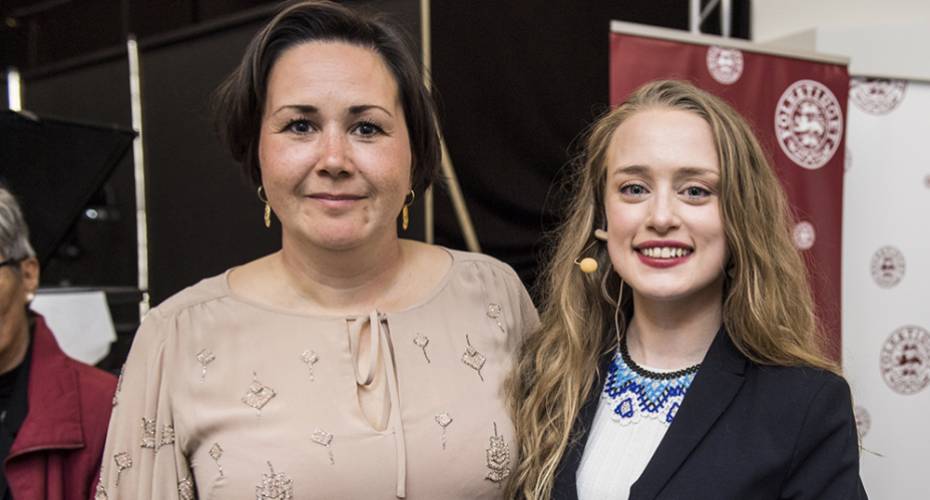
 

Aki-Mathilda Høegh-Dam (right) and Aaja Chemnitz, the two parliamentarians from Greenland now hold decisive powers. Photo: Leiff Josefsen

Since the election, three North Atlantic members of the Danish parliament — two from Greenland, a former Danish colony, and one from the Faroe Islands, a semi-autonomous group of 18 islands in the North Atlantic — have held the power to decide who will lead the government in Copenhagen for the next four years.

I can assure you that this is not a common situation in Copenhagen, the Kingdom’s capital, from where I write, and on the fringes of the furor that this situation has provoked in some quarters, thoughts of possible changes to our constitution are now being aired.

Arctic power

Although the situation is unusual, everything is happening according to carefully elaborated rules and procedures constructed to keep the Danish Kingdom inclusive and operating like a well-oiled machine. Even if there is more than 3,500 kilometers separating Copenhagen from Nuuk, Greenland is still — like the Faroe Islands — a part of the kingdom (unlike Iceland, which severed its last formal ties to the Danish king in 1943 and became a fully independent sovereign republic).

As we digest the peculiar details of the present, many Danes have been forced to revisit our old relations to the Faroe Islands and Greenland and to recount why it is that a tiny number of votes, cast by people who live far away in the Arctic and who speak their own separate languages, can suddenly hold such sway over our national politics.

The basic question, of course is whether it is still fair and good that the peoples of Greenland and the Faroe Islands have such powers?
Are the old rules and procedures, established in another era, still legitimate and sufficiently reflective of our values and ideals?

As one of our former prime ministers, the liberal Lars Løkke Rasmussen quipped on television in the late hours of the election night as he licked his electoral wounds:

“If you look at Denmark — not the Danish realm, but Denmark — there is no red majority. Only because of the way the votes fall in Greenland is there a red majority,” he said.

Others followed suit. Nobody questioned openly the electoral system that  allows the North Atlantic members of the Danish parliament their powers, but the electoral campaign had already revealed how Danish politicians will at times lack respect for their North Atlantic counterparts.

One contender for the office of the prime minister, the conservative leader Søren Pape Poulsen, was quoted during the campaign as remarking that “Greenland is just Africa on ice,” a slur allegedly aired during a visit to the U.S. Embassy in Copenhagen. Poulsen had to apologize to the people of Greenland on prime time TV while a roar of dissatisfaction made its way from Nuuk.

Laws and tradition

Many Danes would be unable to remember the full explanation as to why voters in the Faroe Islands and in Greenland can suddenly wield such influence over the political process in Denmark.

As our constitution was put in place in 1849, the Faroese were considered part and parcel of Denmark’s cultural and historic realm. There were less than 10,000 people living on the islands at the time. Moreover, the islands were steered by Danish officials, the islanders spoke (and still speak) a Nordic language, and as a new parliamentary system was established on the basis of the Kingdom’s new constitution, the Faroese were guaranteed the right to elect two members of parliament.

In 1953, following a national referendum in Denmark (but not in Greenland), the constitution was revised and an end was put to Greenland’s colonial status. Greenland was turned instead into a fully integrated part of the Danish Kingdom and those who lived in Greenland became, like the Faroese, Danish citizens.

As all legislation pertaining to Greenland came from Denmark, Greenland was accorded the same right to elect two members of parliament.

The four North Atlantic members have since been counted as fully mandated members of parliament in Copenhagen. They carry exactly as much or as little political weight and influence as the 175 other members of parliament — and this is all stipulated by the constitution.

Most of the year, the efforts of these four members of parliament raise few alarms. The media, the public and most Danish politicians seldomly concern themselves with the affairs of Greenland or the Faroe Islands, but then — boom — suddenly, as in these days, the four extra votes may become crucially important as a majority in the Folketing, Denmark’s parliament, is needed to form a new government.

Tiny votes

This is then the resulting state of affairs: As I write this on Tuesday, a struggle for the central hold on political power in Denmark hinges on three politicians from Greenland and the Faroe Islands, who have chosen to support the efforts of Mette Frederiksen to form a new government.

Behind them stand relatively small numbers of voters. The two from Greenland received 4,289 (Aaja Chemnitz) and 6,655 votes (Aki-Mathilda Høegh-Dam). That is, from a Danish perspective, not a lot of people, and as the media in Denmark have been careful to report, more than half of the electorate in Greenland did not even take part in the elections. Most people in Greenland seem to care more about who holds power in Inatsisartut or Naalakkersuisut, the parliament and government in Greenland, respectively.
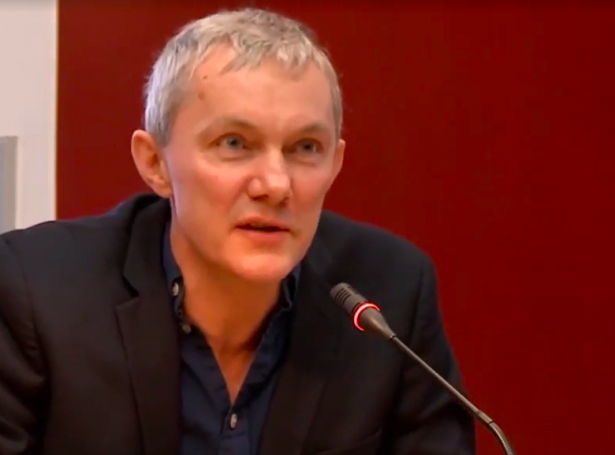
Sjurdur Skaale finds the power he suddenly holds over DAnish politics unreasonable

Sjúrður Skaale, the Faroese, won 3,804 votes at the polls in the Faroe Islands. In total, less than 15,000 voters invested in these three politicians, but if only one of them changes his or her mind tomorrow, the political situation in Copenhagen will be turned on its head. Somebody other than Frederiksen will win the power to lead negotiations to form the next government.

Unreasonable?

While we wait for the results, Frederiksen, a Social Democrat and acting prime minister, has won the mandate to lead the negotiations.

At the elections, her Social Democratic party and the center-left parties that support her won exactly 90 seats or a marginal majority of the 179 seats in parliament, but only if you include the three members from the North Atlantic who have chosen to support her.

We have to look back to a general election in 1998 to find a similar situation. The Danish prime minister of those days won another four years in office only through the support of a single politician from the Faroe Islands. The balance tipped when the Faroese support was declared on TV late into election night.

To top up the current turmoil, Sjurdur Skaale, the Faroese Social Democrat now re-elected into key position, argues that his own immediate hold on power is both undemocratic and illegitimate.

In and op-ed for JyllandsPosten, one of Denmark’s main media outles, he wrote last week:

“When a legitimate, democratic election leads to a result that is unfair and illegitimate, there is something wrong with the very system.”

“When many now find it problematic that I and the two Greenlandic members of parliament decide who will be prime minister, it confirms this very grave condition: The constitutional provisions for the four North Atlantic members might undermine Danish democracy.”

Outdated constitution

Skaale’s main point is that the Faroe Islands of today is a very different nation from the Faroe Islands of 1851, when the first Faroese politicians took their seats in the newly established parliament in Copenhagen.

In those days, the legislators in Copenhagen coined basically all legislation pertaining to the Faroe Island, and most people found it natural that Faroese politicians took part in the legislative process.

Today, as Sjurdur Skaale is at pains to explain, the kingdom works in radically different ways.

“The political development has led us far beyond the legal boundaries of the constitution. If the constitution is a size 42 shoe, the Danish realm is a size 47 foot,” Skaale writes.

Today, most legislation for the Faroe Island is designed and decided on by Lagtinget, the Faroese parliament, and Landsstyret, the Faroese government in Torshavn, just as most legislation in Greenland is designed and decided by Inatsisartut, Greenland’s parliament, and Naalakkersuisut, Greenland’s government in Nuuk. The role of Folketinget has been greatly reduced.

“I now hold a seat in a parliament that does not legislate for the voters who have elected me,” Skaale wrote. He also finds it wrong that he can influence Danish legislation that will put burdens on Danes in Denmark, even if the Danish electorate cannot pay him back:

“Through the fiscal bill I can lay burdens on citizens who cannot punish me at the next elections. They cannot reach me. I am elected in another country,” he wrote.

Skaale has advocated an update to the Danish constitution for some time, but he has been unable to raise any sizeable support in Copenhagen and there is little support for his view in Greenland: “I see no reason to devalue the worth of our mandate. It is described in the constitution,” Aaja Chemnitz, one of the two re-elected members from Greenland told me a few days ago. She is currently using her suddenly swollen influence to push for, for instance, quick implementation of the largest ever investigation into possible Danish wrong-doings in Greenland, a project that was agreed prior to the elections.

Last year, when Skaale tried to win support for his views in Folketinget, Prime Minister Frederiksen answered with a dismissal:

“The four North Atlantic members of Folketinget bring something very, very important — a focus on the conditions that pertain in particular to the Faroe Islands and Greenland, but also to the combined efforts of the realm. I have no problems with or and suggestions for changes to the conditions under which we work.”


First published at ArcticToday.com 8 November 2022


blog

Uncertainty reigns over the future of Arctic cooperation with Russia

november 4, 2022 • Af

The very first sentence in the new U.S. National Strategy for the Arctic Region almost didn’t make it into print.

The top sentence is meant to underscore the overarching desire of the U.S. to cooperate with the other seven nations in the Arctic: “The United States seeks an Arctic region that is peaceful, stable, prosperous, and cooperative.”

This pivotal wording was at the top of a final draft, when Russia invaded Ukraine on February 24 and new discussions erupted in the U.S. administration:

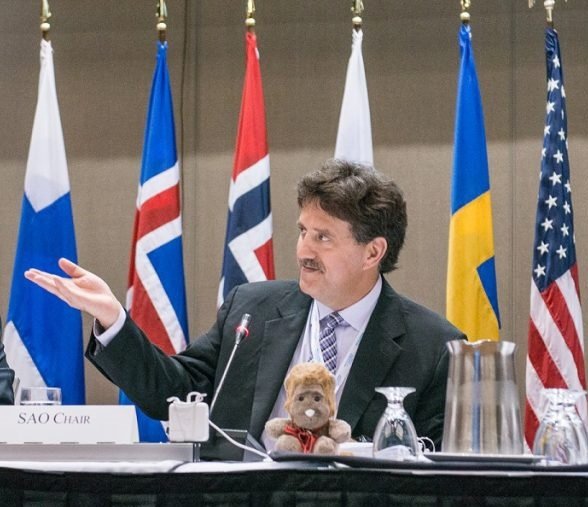
“Following the invasion of Ukraine, the question arose: Do we really imagine an Arctic that is both peaceful and cooperative? But at the end of the day we decided that the answer is yes. We still do have that vision. It is still our goal and ambition, even if it is harder to achieve now,” Ambassador David Balton, executive director of the Arctic Executive Steering Committee in Washington, told me last week at the Arctic Circle Assembly in Reykjavik, Iceland.

Ambassador David Balton, head of the US Arctic Executive Steering Commitee

“I think we all benefited from the peaceful and cooperative environment in the Arctic that we have had the luxury of experiencing since the end of the Cold War but which is now under threat“ he said.


I asked if he really believes that a resumption of cooperation with Russia in the Arctic will be possible in the foreseeable future. “I have to think so,” he said.

Russia conundrum

The Russia conundrum permeated this year’s Arctic Circle Assembly in Iceland, involving some 2,000 attendees, including heads of states, the Crown Prince of Norway, Canada’s Governor General, ministers, ambassadors and scientists — but very few Russians and none affiliated with the Moscow government (or at least nobody known to be).

The seven western Arctic governments would like in principle to shun Russia; freeze cooperation, isolate President Vladimir Putin’s nation as a means of showing solidarity with Ukraine and punishing Russia’s violations of international law, human rights and other basic rules of civil conduct in Ukraine.

At the same time, however, several Arctic actors speaking from the assembly’s podiums or in private appeared painfully aware that a complete stop to cooperation with Russia in the Arctic would cause a host of problems and that some of the early restrictive measures, imposed soon after Russia’s invasion into Ukraine in February, may have to be relaxed.

Read more:

Russia’s Arctic provinces constitute half the landmass of the Arctic region and vast portions of the Arctic seas are within Russia’s exclusive economic zone or territorial boundaries. Also, non-Arctic nations like China and India are continuing cooperation with Russia in the Arctic.

“The Arctic cannot — we cannot afford long-lasting costs for suspension or paralysis,” China’s special envoy to the Arctic, Gao Feng said at the assembly.

Gao Feng, China’s special envoy for Arctic affairs, speaks at the Arctic Circle Assembly in Reykjavik, Iceland, on October 15, 2022. (Melody Schreiber)

Mead Treadwell, a U.S. business investor, former chair of the U.S. Arctic Research Commission and former lieutenant general of Alaska, shared with me his thoughts, based on decades of cooperation with Russian partners:

“We cannot pretend that Russia does not exist just because we disagree with them. They have an agenda in the Arctic; they have allies like China. There are engineering firms not subject to sanctions who will work for them and countries like India who depend on them. To say ‘Russia is off, let us not pay attention to Russia’ is like saying we will not pay attention to the Arctic, the environment, shipping or the Indigenous peoples,” he said.

“It is important that we maintain contact. Since this horror in Ukraine started I have gotten messages from Russians friends who care about the future of the Arctic, who are sad for their country. Some even outwardly protesting. Without those networks, we only have spy satellites to tell us what goes on in Russia, and that is not good enough. It is important for our own security and for all that we are working on in the Arctic — environmental protection, safe oceans and so on. We need the personal connections so that we can hopefully get the governmental contacts back up at some point,” he said.

Much continues

Norway, while tough on sanctions on Russia and military support for Ukraine, continues its more than 50 years of cooperation with Russia on fish stock management in the Barents Sea. Like the Faroe Islands — a part of the Danish Kingdom — Norway also continues to service Russian fishing vessels in designated ports and Norwegian scientists are encouraged to continue private cooperation with Russian colleagues.

Other arrangements like search and rescue agreements with Russia are still operational in different parts of the Arctic, as a halt to such cooperation would potentially leave also seafarers of western Arctic countries to drown, should they need help from a Russian vessel.

Intergovernmental negotiations on fishing in the central part of the Arctic Ocean continues with Russia included; so do talks on the legal rights to the seabed in the Arctic Ocean and other formal processes.

Some weather services, civil nuclear disaster preparedness, coast guard operations, search and rescue and other essential functions depend to varying degrees on cooperation with Russia. The same goes for globally significant Arctic climate science programs, sea ice monitoring, atmospheric research, permafrost observation, biodiversity studies and others.

How long a pause?

The seven western governments in the Arctic have put cooperation with Russia in the Arctic Council, including large and long term science projects, on “pause” — no official contact is allowed with Russian partners — and at the Arctic Circle Assembly several observers agreed that the pause might last for years or even decades.

Numerous science projects involving Russian scientists are halted. Photo: World Meteorological Institute

The urgent question facing a multitude of military bodies, government agencies, institutions of learning and science, private enterprises and non-governmental actors is how to maintain operations in the Arctic if formal cooperation with Russia remains down for years.

[Ukraine conflict hurts Russian science, as West pulls funding]

A multitude of dilemmas are still unresolved: Can some work involving Russians be maintained? Can contacts with official Russian non-military agencies on fisheries, the environment, sports or culture be sustained? Are all types of official research programs involving Russian scientists prohibited? Can U.S., Canadian or European Union grants somehow still be spent on projects involving Russians, even if contacts with official Russian institutions are halted? Can artists collaborate across Russia’s borders? Can they do so on government grants? Can the flow of data on climate change and biodiversity in Russia be maintained through official channels — or privately? What to do with Russians on temporary work stays in the West? Are Zoom meetings with Russians acceptable? Are physical meetings with Russians possible outside Russia? Can money transfers be made to struggling Russian colleagues?

Coexistence?

Evan Bloom, senior fellow at the Wilson Center Polar Institute in Washington and a former Director of Ocean and Polar Affairs of the U.S. State Department foresaw a period of “operational coexistence” rather than cooperation with Russia, but what that means in practice remains murky:

“Russia is key to the Arctic. Russia makes up half of the Arctic and it is not clear what coexistence means in their absence,” he told a sizable group of spectators in Reykjavik.

The Arctic Council has allowed more than 70 joint projects not involving Russians to resume operations while Arctic Council projects and all EU projects with Russian participation remain frozen, including large multi-year programs of climate science and biodiversity.

I asked Evan Bloom if he expected western Arctic governments to partially relax the Arctic Council’s pause to allow projects of particular significance to continue:

“It is very hard at this point for governments to say ‘yes it is possible to work with Russian government institutions or Russians in general,”’ he said.

“It is more likely that private researchers will find a way to work with Russian colleagues in a somewhat informal way. In cases where there is no prohibition and it is not government funded research, there are probably some ways for that very valuable exchange to continue, even if it may be tricky.”

Balton echoed this approach but cautioned against the dangers that collaboration with western partners could mean for Russians actors:

“People-to-people efforts could put people in Russia in jeopardy. We don’t want that. On the other hand, certain activities, in particular science activities — we do need the data coming out of the Russian Arctic, and as government-to-government contacts are largely closed off now, we may have to rely on other forms of communication to get that data,” he told me.

Russians still involved

Research professor Timo Koivurova of the Arctic Center at the University of Lapland in Rovaniemi, Finland, presented at the assembly a study of how Russia’s war in Ukraine has completely altered Finland’s Arctic prospects:

“There will be no return to the pre-war reality,” the report, commissioned by the office of the Finnish prime minister in Helsinki, said.

The report recounts a host of new challenges to Finland. The EU, for instance, has stopped all Russian involvement in Arctic cross-border environmental programs worth millions of Euros. This is especially painful to Finland, who share a border of some 1,300 kilometers with Russia.

“The paralysis of international cooperation and research in the Arctic region is particularly problematic. Many measures related to the sustainability of the Arctic require extensive international and regional cooperation, as nature and the environment do not change in line with national borders,” the report reads.

In Reykjavik, Koivurova recalled for me an interview he did with a Finnish official who works with Russian colleagues to protect the many rivers crossing the Finland-Russia border:

“She asked me why we now have to punish the environment,” Koivurova said.

He reminded his audience that Russia has not given up on Arctic cooperation even if bodies like the Arctic Council and the Barents Euro-Arctic Council have frozen all relations with Russia:

“Russia is represented in almost all intergovernmental organizations and treaty processes relevant to the Arctic. In all the legal circumpolar processes that we have been able to identify, the Russians are there and continuing the work. This shows us the power of international law, and I think it is a good thing,“ Koivoruva told me.

“We have seen the international prohibition on the use of force being broken before, for instance by the U.S. in Iraq. I fully support the sanctions against Russia — the war in Ukraine is horrible — but as academics we also have to look at the bigger picture,” he said.

Science suffers

As many links to Russia are down, the flow of Arctic data into the global climate models is one likely victim. A few weeks prior to the Arctic Circle Assembly I attended a meeting in Keflavik, Iceland of INTERACT, a network of Arctic research stations. One of the founders of the network, British biologist Terry Callaghan, who was included in the IPCC’s Nobel Peace Prize award, has worked in the Arctic for more than 55 years. He has had to put many long-lasting cooperations with state-affiliated Russian partners on hold with no hope of resumption in sight, but still collaborates with individual Russian scientists outside of the EU-funded INTERACT activities.

[Russia’s climate goals and science are also casualties of Putin’s war in Ukraine]

“This whole break of collaborations is a huge and tragic loss. There are Russians on the ground on half the Arctic landmass who are observing day to day what is happening. And this is not a trivial part of the Arctic, but land which is key to the feedbacks that will determine what happens to the climate and to biodiversity on the rest of the Earth. We can look at satellite images and see what is happening on the surface but we cannot understand why we see changes. We need people on the ground,” Callaghan told me.

“It has taken 30 odd years to build up trust and collaboration since the Soviet Union fell apart. Once that trust is destroyed it is not a fast process building it up again. We have to try to maintain some bridges. I don’t believe collaborations on carbon emissions or biodiversity or medical science is going to hurt anybody. If we have no bridges at all, it will be a disaster for the future,“ he said.

Researchers based at the Toolik Field Station, on Alaska’s North Slope, work on an Arctic Lake. (Craig McCaa / BLM)

Professor Syndonia Bret-Harte, science co-director at Toolik Field Station of the University of Alaska, the largest Arctic field station in the U.S., also recommended contact be maintained with Russian partners as long as their safety in Russia was not imperiled.

“Very few people in the West speak Russian, so we are dependent on the Russian scientists to tell us what is going on. Also, the pause (of the Arctic Council) has made it much more difficult for Russian scientists to do science because their sources of funding have been reduced. I think there is going to be a big gap in knowledge. We will still have some sort of knowledge like remote sensing, but you will not have the on-the-ground perspective, which is very valuable,” she said.

“The longer the pause lasts the harder it is going to be to get things restarted. I think the sanctions against Russia are appropriate and I don’t have a problem complying with them. But I feel quite strongly that the efforts of individual people to collaborate should not be restricted. Putin’s efforts to isolate his people — I don’t think we need to help him do that.”

First published on ArcticToday.com 22. October 2022.